
A moisture meter won’t detect mold spores or tell you what’s growing behind a wall. What it will tell you is whether the conditions for mold already exist — often weeks before anything is visible. For homeowners trying to figure out whether a stain, smell, or soft spot is worth worrying about, a $30–$100 meter is usually the fastest way to get real data instead of guessing.
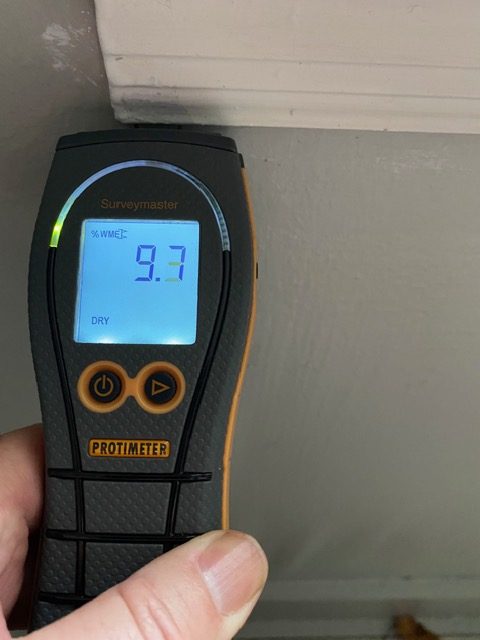
What a Moisture Meter Actually Measures
Moisture meters measure the moisture content of a material — wood, drywall, subfloor — using electrical resistance or capacitance, not the presence of mold itself. Think of it as measuring the conditions mold needs rather than mold itself. Elevated moisture doesn’t guarantee mold is present, and a normal reading doesn’t guarantee it isn’t, especially if the material dried out before the meter was used.
Pin vs. Pinless Meters: Which One You Need
Pin meters use two small probes that puncture the surface for a direct reading at a specific depth, which makes them useful for confirming a suspicious spot on wood trim or a stud. Pinless meters scan through a surface electromagnetically, so you can sweep a wall or floor without leaving marks. Most homeowners are better served starting with a pinless meter for a first pass, then using a pin meter to confirm anything that reads high.
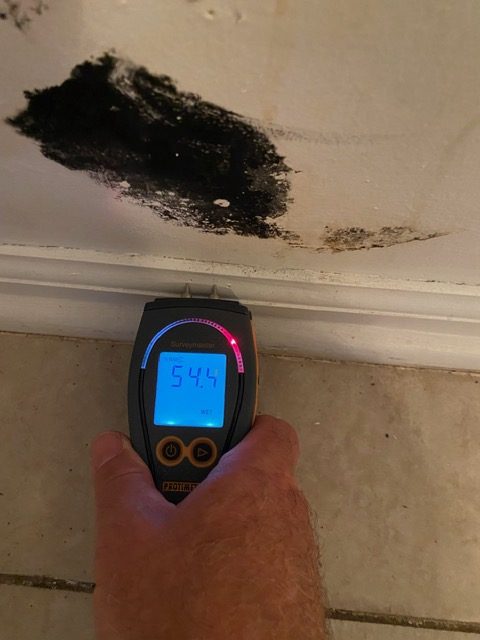
What Counts as a Normal Reading (And What Doesn’t)
General benchmarks help, but they aren’t universal. Softwood framing is usually considered dry below roughly 16% moisture content, and sustained readings above 17% create conditions where mold can begin developing within a day or two if the material stays wet. Drywall and other materials don’t use the same percentage scale across meter brands, which is why comparing a suspect area to a known-dry reference spot in the same room matters more than chasing a single absolute number.
How to Use One the Right Way
Start by testing a known-dry area of the same material as your baseline, then test the area you’re concerned about and compare the two. Test several points rather than one — moisture rarely spreads evenly — and note the highest reading, not just the first one. If you’re checking after a leak or heavy rain, retest over the following days rather than relying on a single reading, since materials can trap moisture that takes time to show up or dry out.
What a Moisture Meter Can’t Tell You
A meter won’t identify what type of mold you’re dealing with, won’t measure airborne spore counts, and won’t tell you why a spot is wet — that could be a plumbing leak, condensation, roof intrusion, or grading around the foundation. If a reading is elevated and you’re also noticing other signs of hidden mold, or if a household member has ongoing symptoms, that’s a signal to bring in a professional rather than keep testing on your own.
Turning a Reading Into a Next Step
An elevated reading isn’t a diagnosis, it’s a prompt to act. Dry the area, find and fix the moisture source if there is one, and retest in 24 to 48 hours to see whether the number is actually coming down. If it isn’t, or you’re not sure how to interpret what you’re seeing, the Homeowner’s Mold Risk Checklist walks you through scoring what you find room by room so you know whether to keep monitoring or call in a professional. If you’re sizing up one specific stain rather than a whole zone, see How to Know If a Stain in Your House Is Mold for the full visual, moisture, and odor test.
Common Questions About Moisture Meters and Mold
Can a moisture meter detect mold directly?
No. It measures moisture content in a material, not mold spores or species. It tells you whether conditions are favorable for mold, which is useful for deciding where to look, but it can’t confirm mold on its own.
What moisture reading means I have a mold problem?
There’s no single universal number, since scales vary by material and meter. As a general guide, wood-based materials holding moisture above roughly 20% for more than a day or two create favorable conditions for mold growth, especially compared to a dry baseline reading taken elsewhere in the same house.
Do I need a professional-grade moisture meter, or will a cheap one work?
A basic pinless or combination meter in the $30–$80 range is enough for most homeowners doing a first check. Professional-grade meters offer more precision and material-specific settings, which matters more for inspectors documenting findings than for a homeowner deciding whether to investigate further.
How long after a leak should I check moisture levels?
Check as soon as you notice the leak. Materials like drywall and subfloor can hold moisture well after a surface looks dry, so a single same-day reading can miss ongoing dampness trapped underneath. A mold colony can begin to form within 24-48 hours after the leak happens. If you suspect moisture is inside a wall cavity and readings are elevated, it’s prudent to call a mitigation company to check to see if the source can be detected and drying equipment should be used.